Bakelite / Phenolic Laminate Machining for Insulating Parts
HGW 2082 is a cotton-fabric phenolic laminate — DIN 7735, PF CC 201 to EN 60893 — and a thermoset that is machined, never moulded. Because it does not melt, features are cut straight from sheet and rod: insulating plates, brackets, fixture blocks and guide rails held to ±0.01 mm. Electrical and thermal values come from the data sheet of the grade you specify; we quote to the drawing, not to an assumed dielectric number.
A thermoset that is cut, not moulded
What that changes for the drawing, the tolerance and the lead time.
No tooling, no melt
HGW 2082 arrives as pressed sheet or rod, so features are machined straight from stock. There is no mould to amortise and no shrinkage allowance to negotiate — a revision costs a new program, not a new tool.
Insulation survives machining
The dielectric property belongs to the laminate itself, not to a coating, so a cut edge or a drilled bore insulates like the face does. We do not quote generic dielectric or temperature values; they come from the data sheet of the grade supplied.
Clean edges on a fabric laminate
Cotton fabric reinforces the resin, and a dull cutter tears it instead of shearing it — visible as a fuzzy edge and a rough bore. Sharp carbide, the right feed and backing support are what keep slots and threads clean.
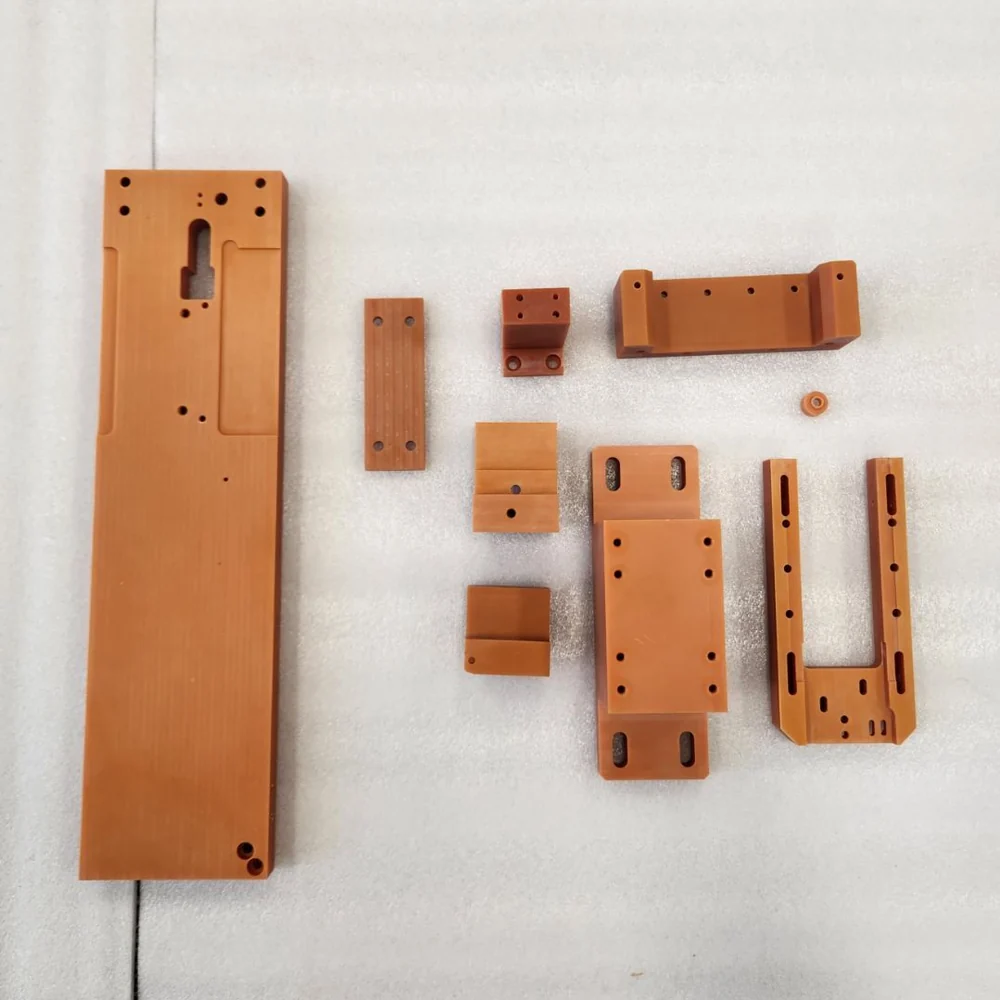
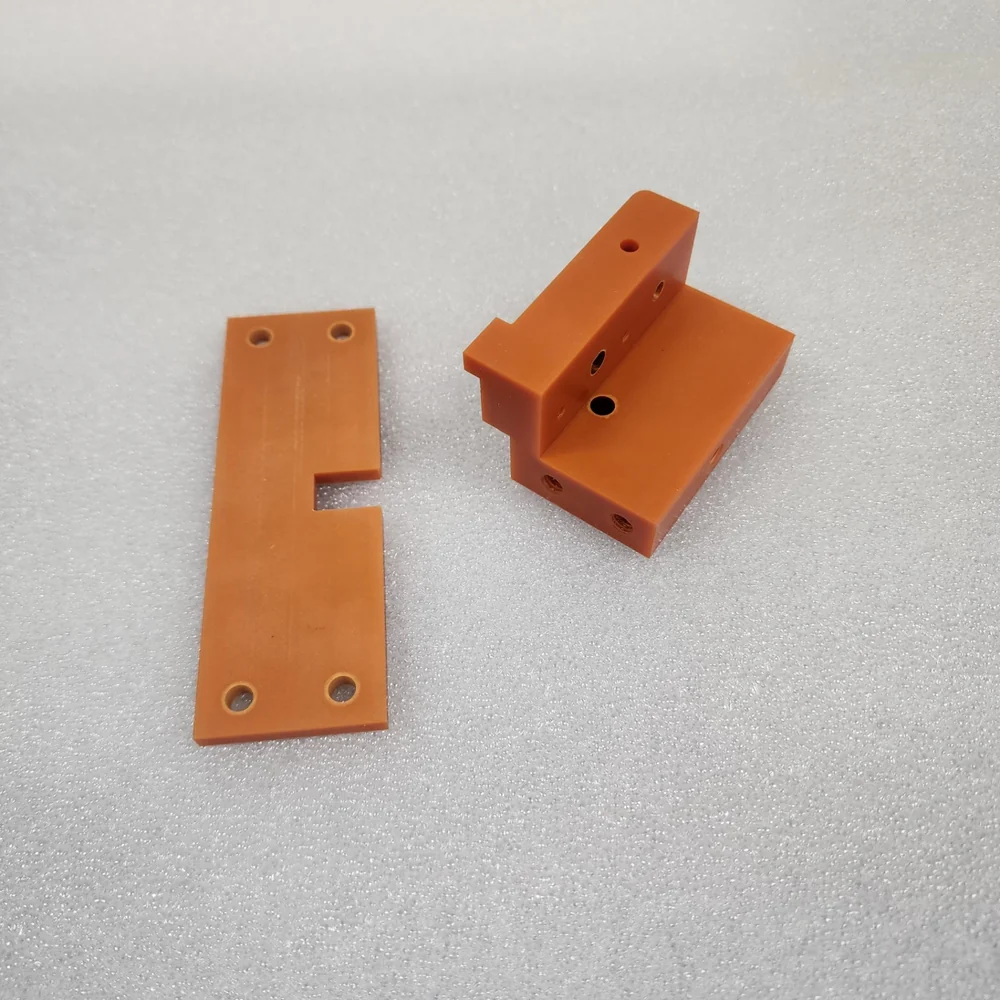
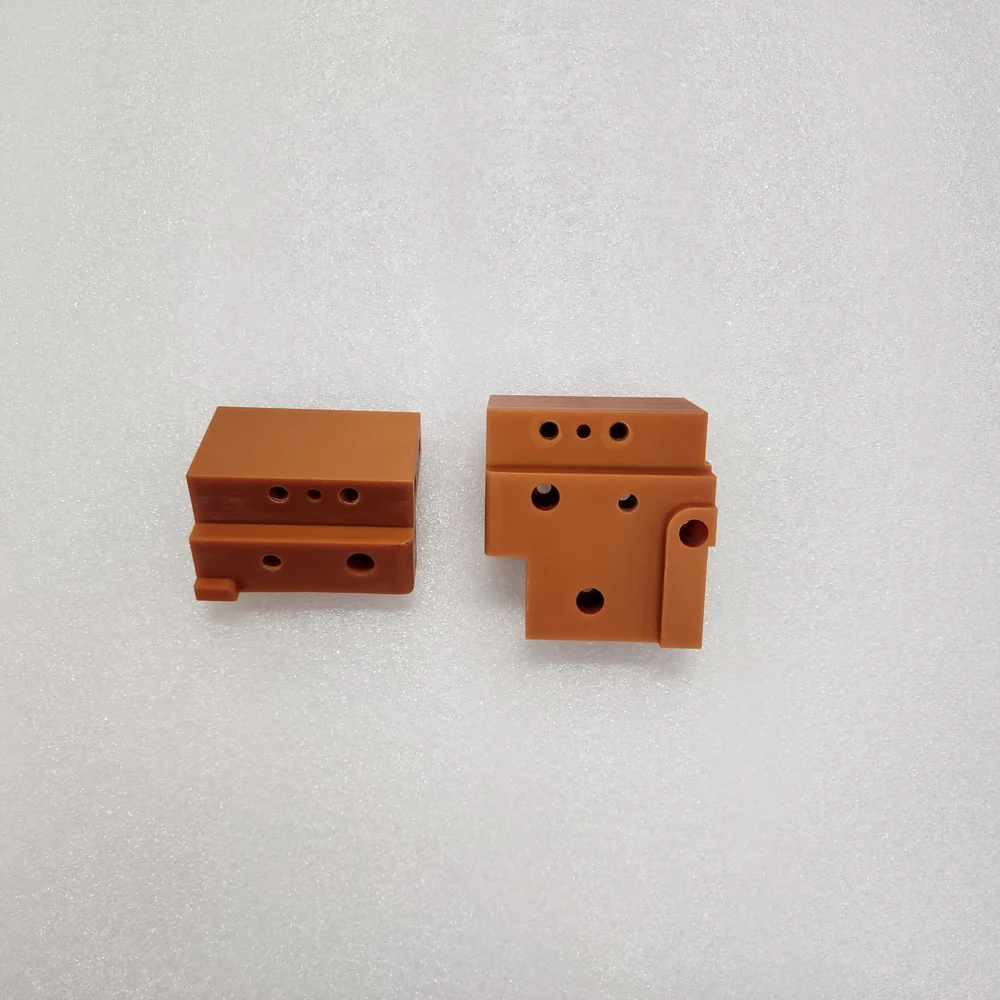
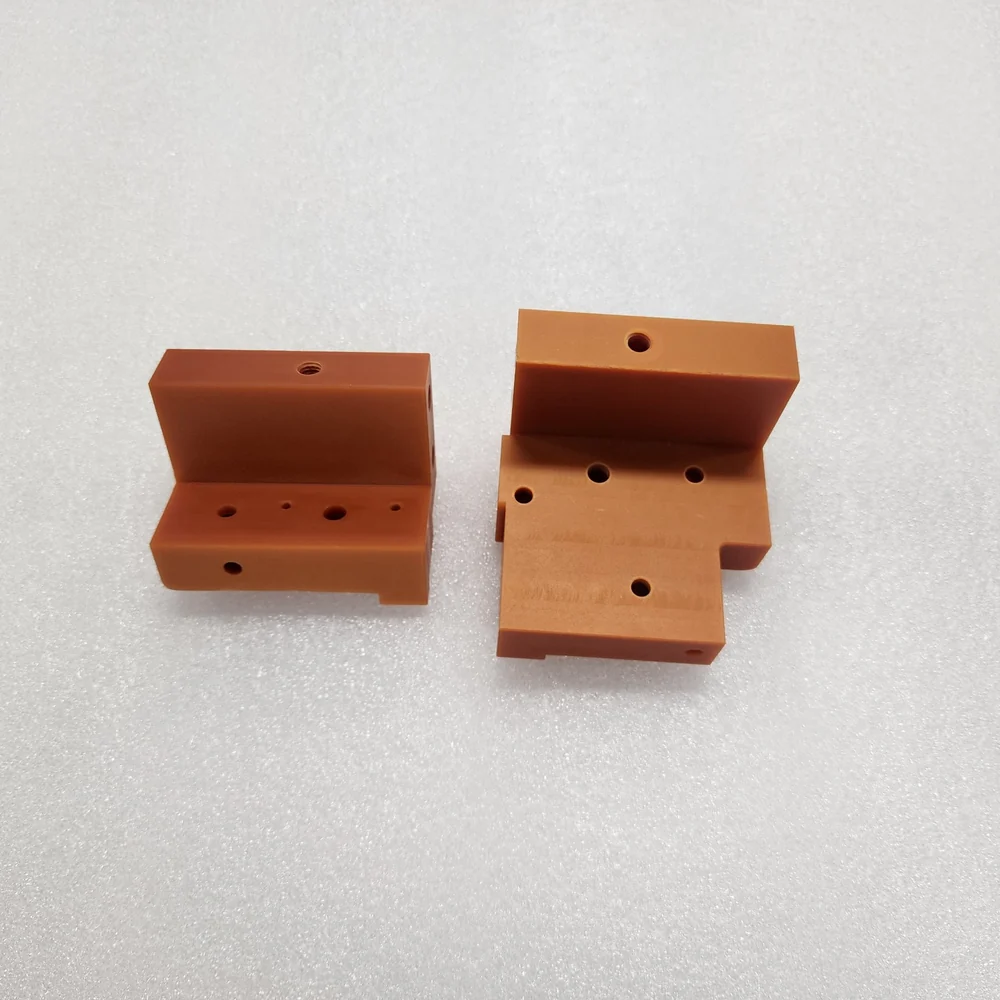
HGW 2082 parts from our workshop
Photographs of phenolic parts we have machined — described by what is visible in the image, without customer or project names.
Bakelite / Phenolic Machining
What we confirm before cutting. Grade-specific electrical and thermal values come from the data sheet of the laminate supplied.
| Capability | Specification |
|---|---|
| Material | HGW 2082 / HGW 2083 — cotton-fabric phenolic laminate (DIN 7735, PF CC 201 to EN 60893); paper-based phenolic HP 2061 and Pertinax-type grades machined as well |
| Typical tolerance | ±0.01 mm on machined features, confirmed against your drawing |
| Processes | CNC milling, drilling, countersinking, slotting, profiling, pocketing |
| Milling envelope | Up to 2000 × 1000 mm (3-axis); 1200 × 2000 mm on 5-axis |
| Tooling | Sharp carbide cutters; feeds and extraction set for a fabric laminate |
| Stock | Pressed plate 15–500 mm thick, cut to the drawing outline; sheet size confirmed at quotation |
| Customer-supplied material | Accepted — we cut from your plate; the data sheet and certificate you send stay with the part |
| Typical use | Insulating plates and spacers · fixture and jig blocks · brackets and guide rails · terminal and busbar supports |
| Electrical / thermal data | Per the data sheet of the grade supplied (HGW 2082: DIN 7735 / PF CC 201) — we do not quote generic values |
| Inspection | Zeiss CMM on critical features; first-article inspection report on request |
| Prototype lead time | Typically 5–10 working days |
Where the material sets the limit
We machine laminate; we do not mould it, and a cured thermoset cannot afterwards be reformed, welded or bent — a design change means a new part, not a reshaped one. HGW 2082 is hygroscopic and specified for the low-voltage range; where a drawing needs higher tracking resistance, wet service or continuous operation above roughly 110–120 °C, the grade has to change before the machining does. Put the grade on the drawing and we machine to it, or tell us what the part has to survive and we will say which grade fits.
From Drawing to Delivered Part
A short, engineering-led route for insulating components — no mould, no tooling amortisation.
Submit & Review
Send the drawing, the grade (HGW 2082 or another phenolic laminate) and the sheet thickness. Engineers check tool access, thin walls, thread depth and how the part will be held without crushing the laminate.
Quote & Material Plan
The quote names the stock size the part will be cut from, so material utilisation and offcut cost are visible instead of buried in the number.
Machine & Inspect
Milling, drilling and slotting with sharp carbide and extraction at the spindle, then Zeiss CMM checks on the critical features.
Deliver & Support
Deburred, kitted and labelled. Repeat orders run from the same program, so a revision is a program change rather than a restart.
Frequently asked questions
Request a Quote
Tell us about your program. The fields below help our engineering team prioritize recurring, long-term supply programs with equipment manufacturers.
What happens after you send your files
- Within 1 business day an engineer — not a salesperson — reviews your drawings and replies.
- DFM review: tolerances, material and risk flags, before any cutting begins.
- Your quote includes a material-verification plan: grade, EN/DIN check, certificate strategy.
Critical features are verified in house · material chemistry confirmed by spectrometer · EN 10204 3.1 certificates available.
Prefer email? Write to us directly at info@prototech-machining.com
Drawings and CAD files are used only to quote and manufacture your parts. They are not shared with third parties, and we sign an NDA on request — even before you send anything.
Our form captures production type, annual quantity and project status up front — so we can focus engineering resources on long-term supply relationships, not one-off inquiries.
Talk to our team about special materials, tolerances or a failed-supplier recovery before you send drawings.